
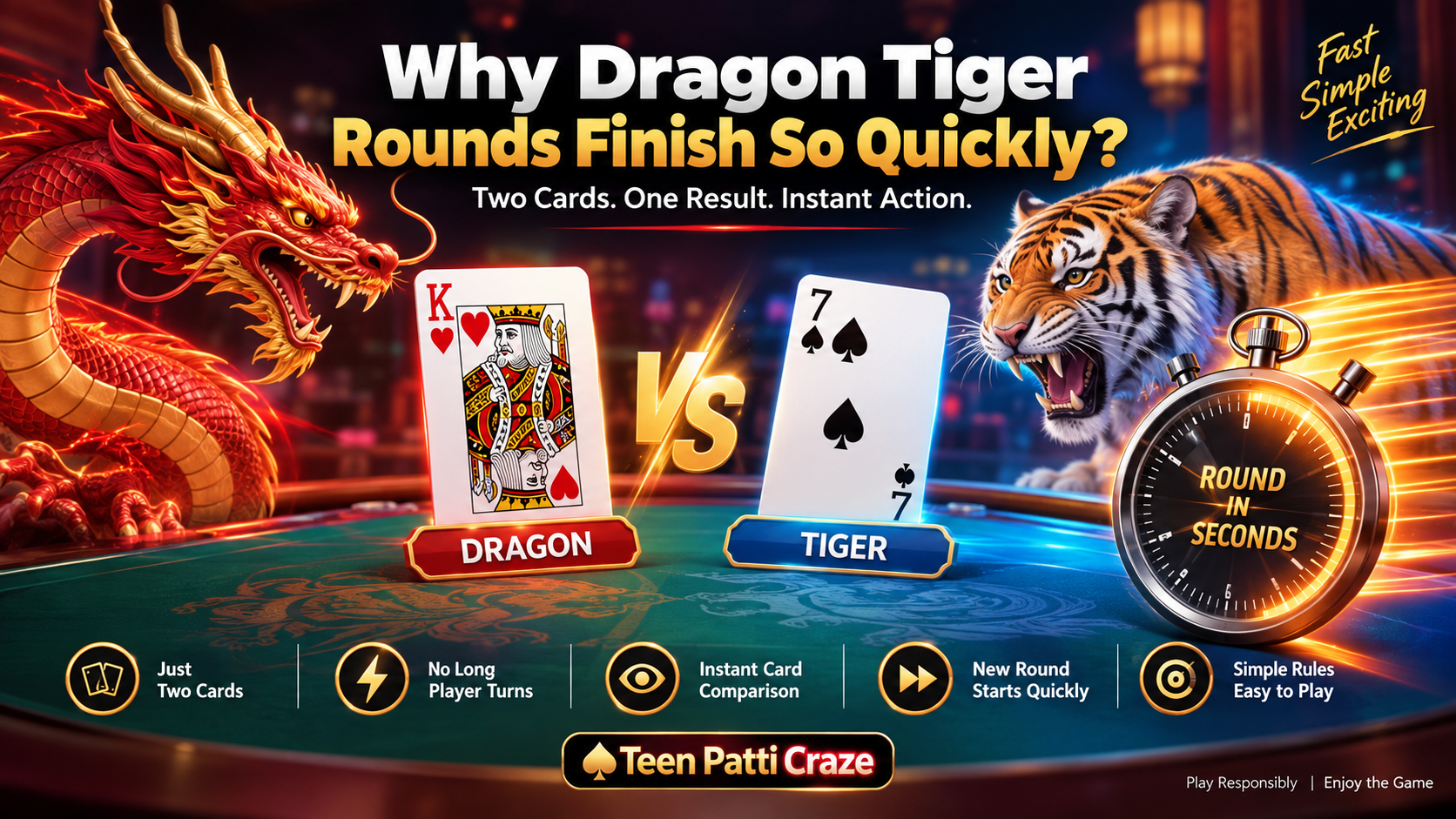
Dragon Tiger is known for its fast and simple gameplay. Unlike many card games, a Teen Patti Dragon Tiger round does not involve long betting turns, multiple cards, or complex hand combinations. The basic result comes from just two cards: one for Dragon and one for Tiger. Players choose a result, the cards appear, and the higher card decides the outcome.
This simple structure explains why a Dragon Tiger Teen Patti game round can finish within seconds. The game does not need several stages before players know the result. Understanding this process can help new players see what makes Dragon Tiger different from longer card games.
Quick Answer: Dragon Tiger rounds finish quickly because each round uses only two cards. One card goes to Dragon, one goes to Tiger, and the cards are compared by rank. There are no long betting turns or multi-card hands after the deal.
The biggest reason for the short round time is the number of cards involved.
A standard Dragon Tiger round deals one card to the Dragon side and one card to the Tiger side. The game then compares their ranks. If Dragon has the higher card, Dragon wins. If Tiger has the higher card, Tiger wins. When both cards have the same rank, the result is a Tie.
There is no need to build a three-card hand like in Teen Patti or wait for several community cards like in some other card games.
Traditional card games often include several decisions between players. A player may need to check cards, place a bet, raise, call, or fold.
Dragon Tiger keeps this process much shorter. Players normally select their preferred outcome before the cards are dealt. Once the cards appear, the system compares them and displays the result.
This simple flow removes many steps that can make other games take longer.
Dragon Tiger uses a straightforward ranking system. Cards run from Ace through King, with the higher rank beating the lower rank. Suits do not decide the main Dragon or Tiger result.
For example:
There is no extra calculation or additional card stage.
After one result appears, the next round can begin within seconds. The game does not need to reset a complicated hand structure or wait for several players to complete individual turns.
This creates a continuous flow:
Choose → Cards Deal → Compare → Result → New Round
That short cycle is one of the main reasons people describe Dragon Tiger as a fast card-comparison game. Teen Patti Craze also describes its Dragon Tiger format as a game where a new round starts within seconds.
A teen patti game dragon tiger format feels different from classic Teen Patti because the two games use very different structures.
Classic Teen Patti usually involves three cards for each player and multiple betting decisions. Players can continue betting, raise the stake, fold, or reach a show. That creates more stages within a round.
Dragon Tiger removes most of those stages. Its main outcome comes from comparing two cards.
The same idea helps explain why searches such as rummy dragon tiger game can create confusion. Rummy and Dragon Tiger are different types of card games. Rummy involves arranging cards into combinations, while Dragon Tiger focuses on comparing two cards.
No. A fast round does not make a result more predictable.
The speed comes from the game's simple structure, not from a special method that improves the chance of winning. Teen Patti Craze states that each Dragon Tiger deal is independent and generated through a certified-fair random number generator. Previous results therefore do not determine the next round.
For example, if Dragon appears several times in a row, that does not automatically mean Tiger must appear next.
Players should also avoid treating the speed of the game as a reason to increase stakes or chase losses.
Dragon Tiger has fewer rules to remember than many multi-stage card games.
A beginner mainly needs to understand:
This simple structure makes the game easy to follow, even for someone who has never played Dragon Tiger before.
Dragon Tiger uses only two cards for the main result. One card goes to Dragon and one to Tiger, and the higher rank decides the result.
The main result uses two cards: one Dragon card and one Tiger card.
No. Each deal is independent. A previous Dragon or Tiger result does not determine what happens in the next round.
The round structure is generally shorter because Dragon Tiger compares two cards and does not use the extended betting stages found in classic Teen Patti.
The card outcome depends on random dealing. Players choose their betting option, but they cannot control which cards appear. Teen Patti Craze describes Dragon Tiger outcomes as chance-based and independent.
No. Round speed does not provide a prediction advantage. Each deal remains independent of previous results.
The main reason Teen Patti Dragon Tiger rounds finish so quickly is simple: the game reduces a card round to one direct comparison. Two cards appear, their ranks are compared, and the result is clear. There are no long hand-building stages or extended player turns.
For readers exploring a Dragon Tiger Teen Patti game, understanding this structure is more useful than looking for supposed prediction tricks. The game's fast pace comes from its design, while every new deal remains independent. Teen Patti Craze's editorial policy also states that its game content aims to educate users rather than promise winnings or present gaming as a source of income.
Source & editorial note: The gameplay information in this article is based primarily on Teen Patti Craze's Dragon Tiger guide and its published Editorial Policy. The site says its editorial team prepares and reviews game guides and updates them when rules or features change. Because real-money gaming rules can vary by location, readers should also check the current laws applicable to their own state before playing.
New to real-money play? Read our Responsible Gaming guidance first.
