Diwali is a festival of lights, family gatherings, sweets, prayers, and traditional entertainment. In many Indian households, games also become part of the celebration. Among the simple games enjoyed during festive gatherings, Jhandi Munda has a special place because it is quick to learn and easy to play with family and friends.
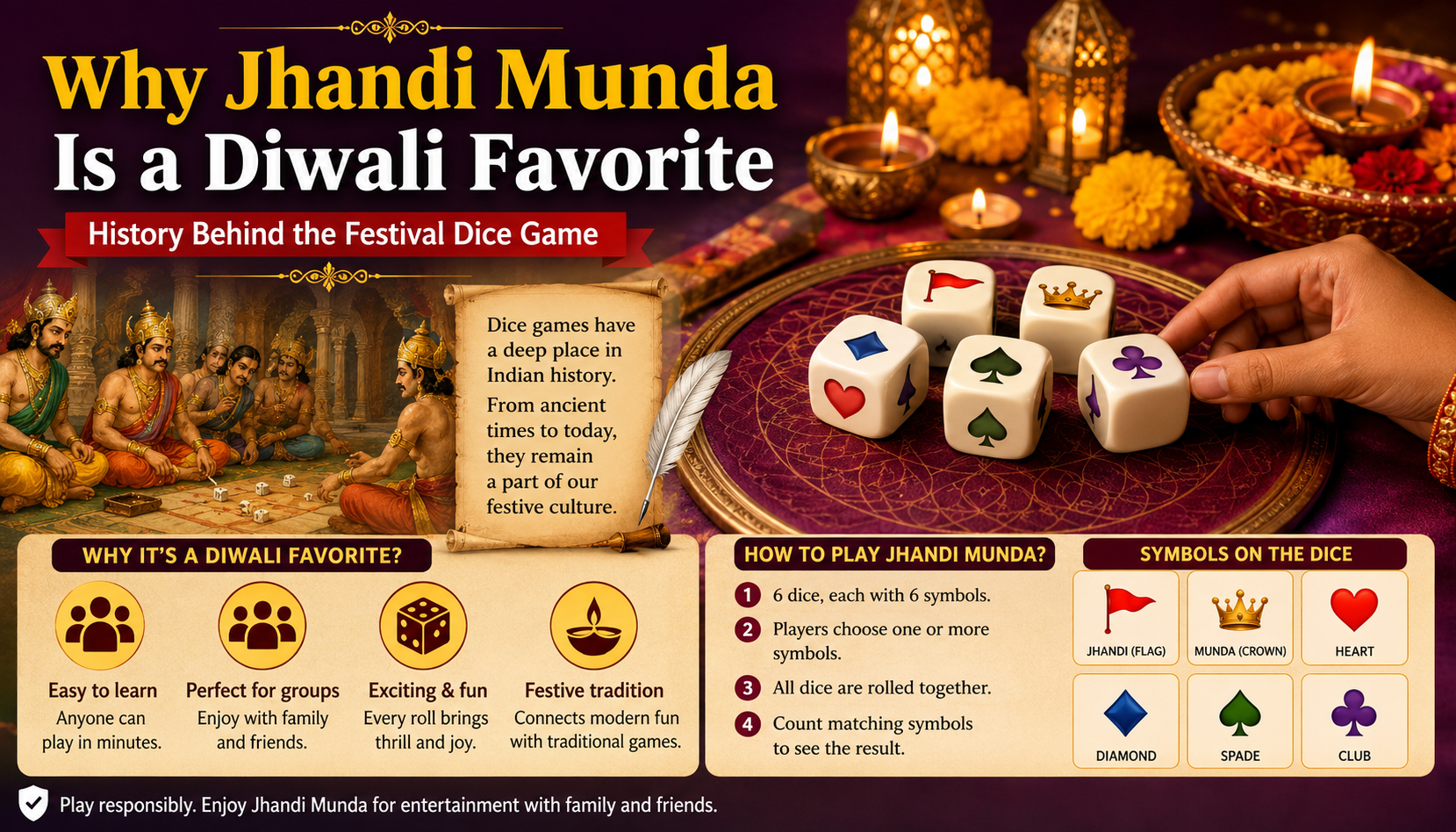
Jhandi Munda is a dice game that uses six special dice. Instead of numbers, the dice carry six symbols, commonly including a flag, crown or face, heart, diamond, spade, and club. Players choose symbols, the dice are rolled, and the result depends on how many times a selected symbol appears.
What Is Jhandi Munda?
Jhandi Munda is also known by names such as Langur Burja and Jhanda Burja in different regions. Similar symbol-based dice games also exist outside India, including the Western game known as Crown and Anchor.
The basic idea remains simple. Six dice are rolled together, and each die has six possible symbols. Players select one or more symbols before the roll. After the dice stop, players count how many dice show their chosen symbol.
This simple format makes Jhandi Munda Teen Patti suitable for short family game sessions, especially when people want an activity that does not require complicated rules.
The History of Dice Games and Diwali
The exact origin of modern Jhandi Munda is difficult to establish from reliable historical records. However, dice games have a much older place in South Asian culture.
Ancient Indian literature contains important references to dice and gambling. The Mahabharata, for example, includes the famous dice game involving Yudhishthira. Academic research also examines the dice episode in the Mahabharata and its wider social and legal context.
Historical reporting has also linked dice traditions with early Indian gaming culture and archaeological evidence from sites associated with the Indus Valley Civilisation.
However, this does not prove that modern Jhandi Munda directly came from the Mahabharata. The safer conclusion is that Jhandi Munda belongs to a much broader and long-running tradition of dice-based games in South Asia.
Why Does Jhandi Munda Become Popular During Diwali?
1. It Is Easy to Learn
A Jhandi Munda round can be understood within minutes. Players only need to recognise the symbols, choose their position, roll the dice, and count the matching symbols.
2. It Works Well for Groups
Diwali brings families and friends together. Jhandi Munda works well in a group because several people can participate in the same round and quickly see the result.
3. It Adds Excitement to Gatherings
The dice roll creates a short moment of suspense. Everyone waits to see which symbols appear and how many times they match.
4. It Connects Modern Fun With Traditional Games
Diwali celebrations often include customs passed from one generation to another. Jhandi Munda fits naturally into this environment because it uses a simple physical game format rather than complicated equipment.
How Is Jhandi Munda Played?
A common version uses six dice, each carrying six symbols. Players select a symbol or several symbols before the roll. All six dice then roll together.
If a chosen symbol appears multiple times, the result usually depends on the number of matching dice. Different versions can use different rules and payout structures, so players should always check the rules of the specific version they are playing.
For a safer family setting, players can use points, tokens, or simple scorekeeping instead of real money.
Jhandi Munda as a Family Diwali Game
The strongest appeal of Jhandi Munda is not necessarily the result of a single roll. Its real attraction comes from the social experience.
During Diwali, people often spend time together after Lakshmi Puja, dinner, and other celebrations. A quick dice game can give everyone something interactive to enjoy.
At the same time, families should remember that games involving money can create financial risks. If Jhandi Munda involves betting, adults should understand the applicable local laws and set clear limits. Playing with free tokens or points can keep the focus on entertainment.
Final Thoughts
Teen Patti Jhandi Munda represents one small part of India's wider tradition of festive games and dice-based entertainment. Its simple rules, quick rounds, and group-friendly format help explain why it remains popular during celebrations.
While its exact historical origin remains uncertain, the broader history of dice games in South Asia is well documented. For Diwali gatherings, playing Jhandi Munda with points or tokens can offer a simple way to enjoy the festive atmosphere while keeping the focus on family, friends, and fun.
FAQs About Jhandi Munda
Is Jhandi Munda a traditional Indian game?
Yes. Jhandi Munda is widely described as a traditional dice game associated with India and neighbouring South Asian regions. It is also known by names such as Langur Burja and Jhanda Burja.
Why is Jhandi Munda associated with Diwali?
Jhandi Munda fits Diwali gatherings because it is quick, social, and easy to play. However, there is no strong historical evidence that proves the modern game originated specifically as a Diwali ritual.
Is Jhandi Munda the same as the Mahabharata dice game?
No. Both involve dice, but there is no reliable evidence that modern Jhandi Munda is the same game described in the Mahabharata. The Mahabharata simply provides an important historical and literary example of dice culture in ancient India.
How many dice does Jhandi Munda use?
The common version uses six dice. Each die has six symbols instead of conventional numbered faces.
Is Jhandi Munda based on skill or luck?
The outcome of each dice roll depends on chance. Players can learn the rules and understand probabilities, but no strategy can guarantee a particular result.
Can families play Jhandi Munda without money?
Yes. Families can use points, coins, counters, or tokens instead of real money. This approach keeps the game focused on entertainment and social interaction.


